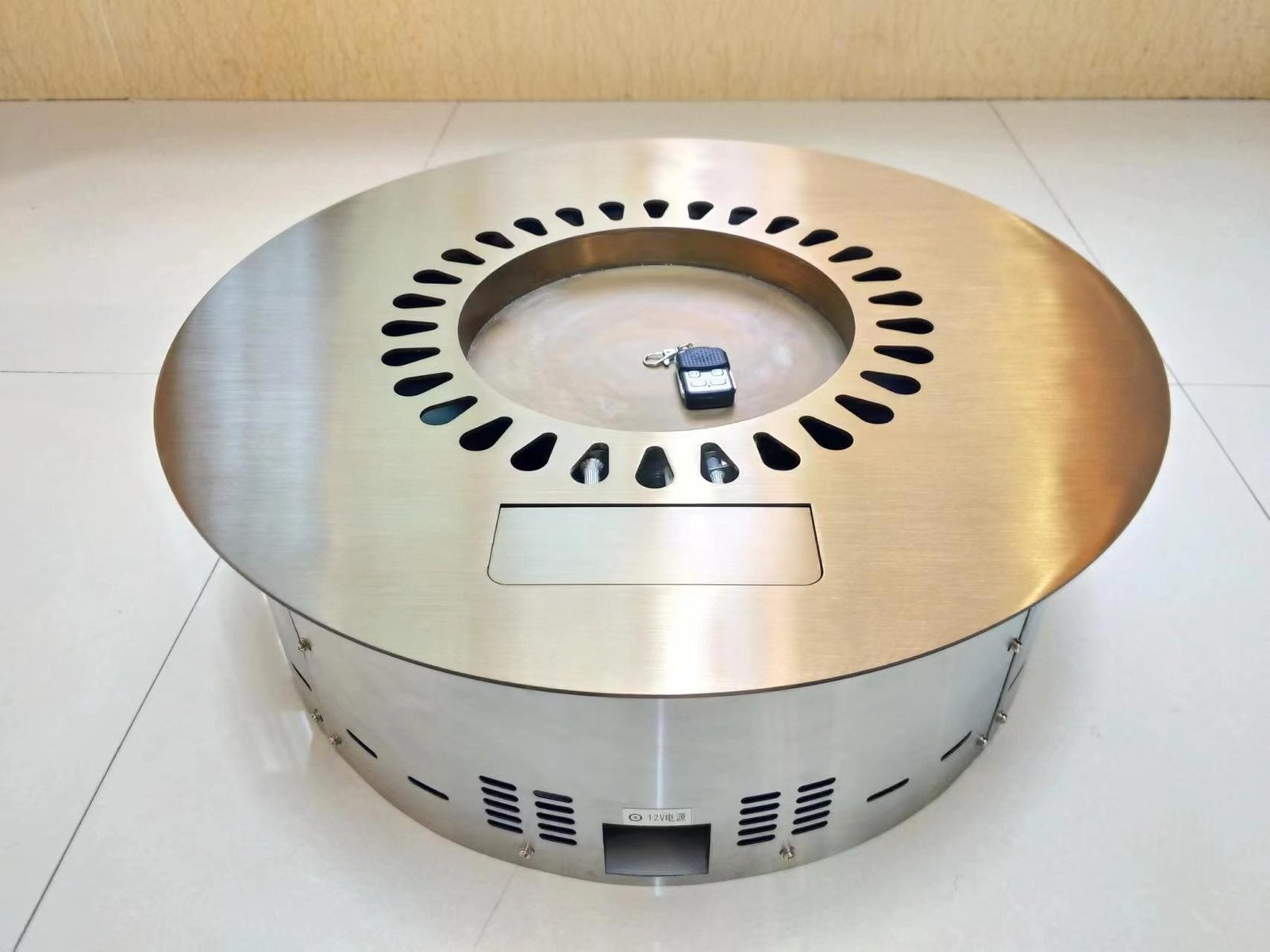
The core functions of ethanol fireplace revolve around three main directions: real fire heating, scene decoration, and flexible adaptation, as follows:
1、 True fire heating function
Using biomass ethanol as fuel and releasing heat through clean combustion, the coverage area of a single heating unit ranges from 10 square meters to 50 square meters, and can be used as a supplementary heating source for local spaces.
The main products of ethanol combustion are carbon dioxide and water, without the smoke and tar emissions of traditional wood/coal-fired fireplaces. The heating process is clean and odorless.
2、 Scene atmosphere decoration function
It can generate realistic and dynamic natural flame effects without relying on electronic simulation flames, and the visual atmosphere is much higher than that of ordinary electric fireplaces.
Suitable for various decoration styles such as Nordic, retro, and modern, widely used in homestays, restaurants, villas, and commercial spaces to enhance the scene style.
3、 Flexible adaptation function without pipeline
No need for traditional fireplace flue and chimney civil engineering renovation, no need to connect gas pipelines, no restrictions on site smoke exhaust conditions, and extremely low installation threshold.
Multi form products such as embedded, standalone, and wall mounted can adapt to most indoor and outdoor spaces, and can be quickly put into use without complex construction.
4、 Security and intelligent control functions
Mainstream models come standard with multiple safety protection mechanisms such as automatic combustion cut-off, overheating protection, and oxygen deficiency alarm, greatly reducing safety risks during use.
The intelligent model supports remote control through an APP, automatic adjustment of flame size, and timed start stop, adapting to the operational needs of unmanned scenarios.
5、 Low carbon environmental protection function
The fuel used is renewable biomass ethanol, which belongs to low-carbon and clean fuels. Compared with traditional fossil fuel heating, it has lower carbon emissions and meets the environmental protection requirements of green buildings.